Guides
Competidores de ShipBob: 10 alternativas fiables para marcas de comercio electrónico en crecimiento
TL;DR
ShipBob es una plataforma de logística para ecommerce fiable, pero dependiendo de tus necesidades, como la claridad en los precios, SLA más rápidos, integraciones con Shopify o alcance global, proveedores como Gonini, ShipMonk, Deliverr, ShipStation Fulfillment, Red Stag o Easyship podrían ajustarse mejor.
Nuestro equipo decidió elaborar un desglose claro de las principales alternativas a ShipBob para marcas de comercio electrónico en crecimiento. Explora la lista para ver qué socio logístico ofrece la combinación adecuada de precios, características y escalabilidad para tu negocio.
¿Listo para escalar? Descubre cómo Gonini simplifica tu logística!
Puntos clave
- ShipBob opera una red global de más de 45 centros logísticos en Estados Unidos, Canadá, Europa y Australia.
- En 2025 ShipBob informó un aumento interanual del 40 por ciento en pedidos gestionados durante la temporada alta, desde Acción de Gracias hasta el Cyber Monday, siendo su temporada alta más importante hasta la fecha.
- ShipBob ha procesado más de 200 millones de pedidos con una precisión reportada del 99.97% en el cumplimiento y una tasa de entrega a tiempo del 99.6%.
- Aunque las cifras parecen impresionantes, la razón por la que las marcas de comercio electrónico buscan alternativas se debe principalmente a costos altos o inesperados, un servicio al cliente deficiente y errores operativos como inventario perdido o envíos retrasados.
- Las marcas con productos de gran tamaño o pesados suelen buscar alternativas porque el modelo de ShipBob está optimizado para paquetes pequeños y medianos.
- Una de las quejas recientes sobre Shipbob indicaba ShipBob está incorporando marcas pequeñas que envían tan solo entre 50 y 100 pedidos al mes, a pesar de que estas cuentas no son rentables y generan la mayoría de las reseñas negativas y la rotación de clientes.
Por qué las marcas de ecommerce buscan alternativas a ShipBob
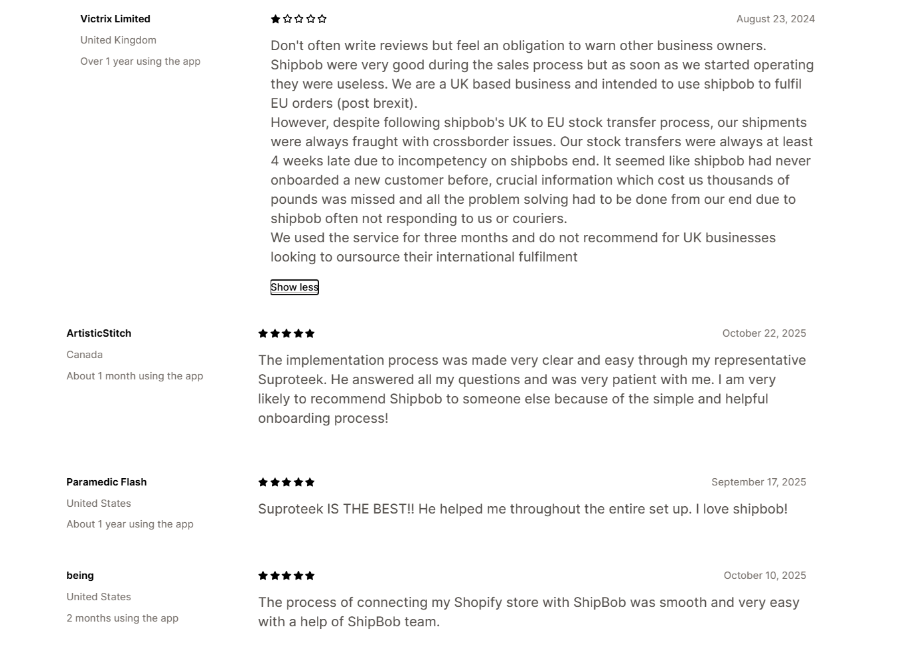
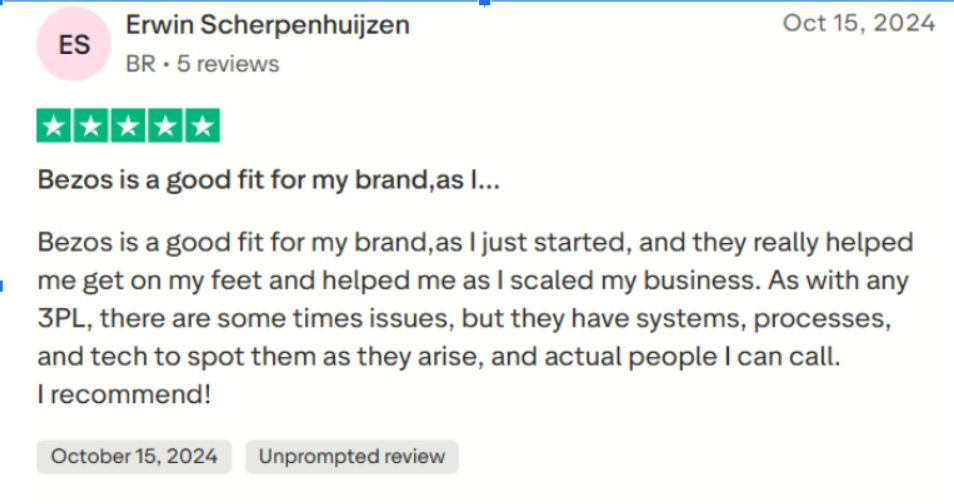
En general, ShipBob tiene una calificación de 4.2 en TrustPilot, basada en 911 reseñas.
Su opinión es positiva y los clientes elogian el hecho de que son muy receptivos a sus comentarios.
Sin embargo, incluso los usuarios satisfechos a veces deciden cambiar de proveedor. Las razones comunes incluyen la necesidad de precios más claros, una mayor consistencia en los SLA durante los períodos pico, flujos de trabajo más flexibles para SKU complejos o una mejor cobertura internacional a medida que su marca se expande.
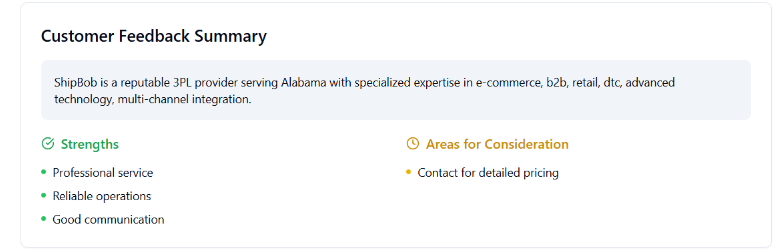
Los comentarios de los clientes se resumen de ecommercejolt.com, y también hay una discusión activa en Reddit que ha continuado durante varios años, ofreciendo una mezcla de experiencias positivas y preocupaciones de diferentes usuarios.
Los comentarios de Reddit sugieren que, si bien ShipBob ofrece tecnología sólida, integraciones e infraestructura logística, varias marcas, especialmente aquellas con SKU no estándar o sensibles a la previsibilidad de los costos, reportan problemas.
Patrones clave de ShipBob: sorpresas en los costos (especialmente en torno al peso volumétrico y el embalaje), percances de inventario o envío, y procesos variables de soporte al cliente/salida.
El cuello de botella más común de ShipBob mencionado en las reseñas en línea es la consistencia de los SLA.
Los comerciantes afirman experimentar recepciones retrasadas, procesamiento más lento en días de alta demanda o tiempos de respuesta inesperados.
Otro punto es la claridad en los precios. ShipBob no es el único 3PL con tarifas variables, pero algunas empresas desean costos mensuales más predecibles.
Cuando se suman el almacenamiento, la recogida y el embalaje, el empaquetado y los ajustes estacionales, puede resultar más difícil pronosticar el gasto real en logística.
Algunas de las últimas reseñas de ShipBob comparten este sentimiento, mencionando algunos casos en los que el costo de la logística fue casi el doble.
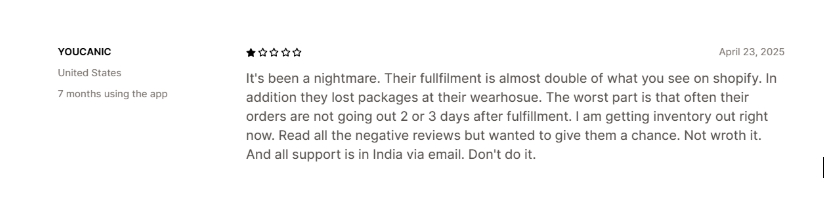
Marcas que venden artículos de gran tamaño o pesados suelen buscar otras opciones, como se vio en una discusión en Reddit. ShipBob se centra en paquetes pequeños y medianos, por lo que los productos voluminosos resultan caros de almacenar y enviar.
Muchos fundadores con muebles, equipos de fitness o maquinaria más pesada recurren a proveedores 3PL especializados en artículos grandes.
Tabla comparativa: ShipBob vs. principales competidores
A continuación, veamos una comparación detallada:
Qué buscar en una alternativa a ShipBob
Elegir el competidor adecuado de ShipBob depende de tus necesidades actuales y de lo que requerirás a medida que crezcan los pedidos. Pequeños detalles como la velocidad de envío, la calidad del soporte y las integraciones influyen directamente en la experiencia de tus clientes con tu marca.
- Asequibilidad para pequeñas empresas → precios sencillos + mínimos bajos → garantiza que evites tarifas sorpresa y puedas escalar sin grandes compromisos iniciales.
- Transparencia en la preparación de pedidos y el almacenamiento → tarifas base claras + costes mensuales predecibles → te ayuda a mantener los márgenes y a pronosticar los gastos con precisión.
- Rendimiento clave de la gestión logística → recepción rápida + preparación de pedidos precisa → reduce los retrasos y evita las quejas de los clientes.
- Gestión de devoluciones y flujos de trabajo → devoluciones sin problemas + soporte para kits/paquetes → mantiene las operaciones eficientes si vendes productos por suscripción o de varias unidades.
- Integraciones con Shopify y Amazon → Flujos de trabajo nativos de Shopify + soporte para Amazon SFP → reduce el trabajo manual y mantiene los pedidos sincronizados correctamente.
- Compatibilidad con marketplaces → Integraciones estables en los principales canales → evita errores al vender multicanal.
- Fiabilidad del seguimiento y la entrega → SLAs estables + alertas proactivas de retraso → mejora la confianza del cliente y reduce los tickets de «¿Dónde está mi pedido?».
- Actualizaciones de seguimiento claras → Visibilidad en tiempo real + escaneos precisos → ayuda a tu equipo de soporte a resolver problemas más rápido.
- Capacidad de gestión logística internacional → Almacenes multirregionales + experiencia en aduanas → acorta los tiempos de entrega transfronterizos y reduce los problemas de aranceles.
- Cobertura global de transportistas → Enrutamiento regional + tarifas con descuento → mantiene el envío internacional competitivo.
- Gestión logística multinodo → Capacidad de dividir el stock + enrutamiento automático → acelera la entrega y reduce los costos de envío en mercados nacionales e internacionales.
- Escalabilidad → Fácil de añadir nuevos centros a medida que creces → evita la necesidad de cambiar de 3PL más adelante.
- Impacto en la experiencia del cliente → Buen embalaje + entrega a tiempo → aumenta las tasas de compra repetida.
- Devoluciones fáciles → Flujo de trabajo de devoluciones sencillo + comunicación clara → aumenta la satisfacción del cliente y el valor de por vida.
Descubre soluciones más inteligentes almacenamiento para comercio electrónico con Gonini
Los mejores competidores de ShipBob para explorar en 2026
¿Cuáles son las alternativas mejor valoradas a ShipBob para la gestión de pedidos de comercio electrónico con precios transparentes y tiempos de envío fiables?
Gonini
Para quién es ideal
Gonini es una excelente opción para marcas de comercio electrónico pequeñas y medianas que buscan precios predecibles, integraciones multicanal fluidas y un socio logístico diseñado para el crecimiento internacional. Funciona bien para equipos que necesitan almacenes regionales, gestión aduanera fiable, acuerdos de nivel de servicio (SLA) rápidos en varios países y una visibilidad clara de los pedidos y el inventario. También es ideal para vendedores que valoran la resolución proactiva de problemas, la gestión de cuentas dedicada y una configuración que escala sin añadir complejidad operativa.
Por otro lado, Gonini no es la mejor opción para marcas que dependen en gran medida de una logística B2B compleja, flujos de trabajo de embalaje altamente personalizados o sistemas de cadena de suministro a nivel empresarial que requieren integraciones profundas y a medida.
También puede resultar menos adecuado para vendedores muy principiantes con un volumen de pedidos extremadamente bajo, y algunos comerciantes prefieren proveedores con más datos de precios públicos o una trayectoria más larga en el mercado estadounidense.
Características principales
Gonini conecta más de 30 canales de venta y mercados a una red de aproximadamente 63 centros logísticos en 16 países, incluyendo el Reino Unido, la UE, EE. UU., Canadá, Australia y los EAU. Los pedidos se sincronizan automáticamente desde Shopify, Amazon y otras plataformas, y se rastrean desde la tienda hasta la entrega en un único panel de control.
Resumen de precios
Gonini utiliza un modelo transparente, basado en presupuestos que agrupa el almacenamiento, la preparación y el embalaje, y el envío ecológico into predictable fees for SMBs.
It positions itself as more affordable than many traditional 3PLs for smaller and mid-sized brands, while still offering discounted carrier rates.
Gonini's the reasonable ShipBob alternative for 2026 for small and mid-sized brands that want automation, SLAs, and transparent costs that scale with them.
When it comes to prices, Gonini often stands out in that comparison because it focuses on predictable fees and SLA-backed service rather than just warehouse count.
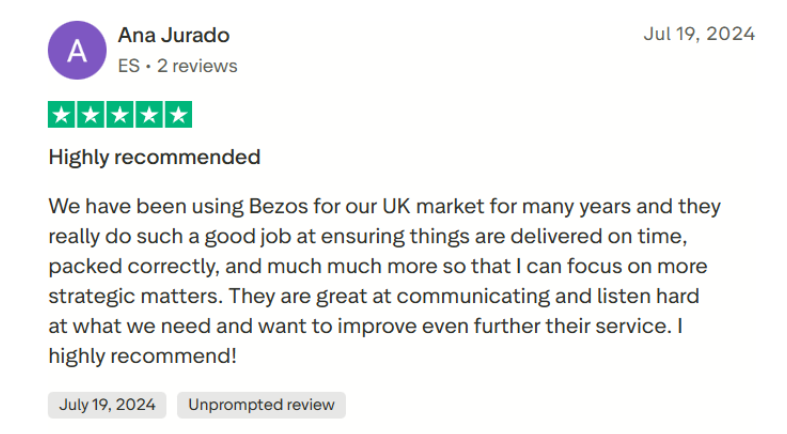
Reviews
ShipMonk
Who it is best for
ShipMonk is a strong fit for DTC and subscription-based brands because it supports multichannel selling across platforms like Shopify, Amazon, and Walmart, offers real-time inventory visibility, and handles complex workflows such as kits, bundles, and subscription packaging.
Its Virtual Carrier Network helps optimise shipping rates as order volume grows, and its infrastructure scales well as brands expand.
However, ShipMonk may feel pricey for very small brands, its tiered pricing can get complex to predict, and some merchants note that costs rise quickly at low volumes. Custom packaging or specialised workflows may add extra fees, and because support quality varies by account manager, the experience is not always consistent across all clients.
Core features
ShipMonk offers ecommerce, subscription box, retail, and FBA prep fulfillment across multiple US and international warehouses. Its Virtual Carrier Network uses multiple carriers to find cheaper and faster routes. The platform connects to major ecommerce tools and marketplaces, giving merchants real-time inventory and order views.
Pricing overview
ShipMonk uses tiered pricing based on monthly order volume, storage, and service complexity. Per-order pick and pack fees decrease as volume rises. Exact numbers are not public by default and are usually provided by quote.
ShipMonk shines when you need one partner to handle DTC, subscription, and wholesale orders on the same backbone.
Deliverr (via Shopify / Flexport)
Deliverr is a particularly strong option for ecommerce brands that sell heavily through Shopify and other major marketplaces and aim to offer fast 1- or 2-day (or even next-day) delivery to boost conversion and competitiveness. Its wide U.S. footprint, support for fast shipping tags, and integrations make it well suited for merchants prioritizing speed in domestic fulfilment.
Users praise the fast shipping options, transparent cost-estimating tools, and simplified fulfilment workflows.
On the flip side, Deliverr may be less suitable for brands that require high levels of branding control, custom packaging, returns handling, or international shipping ,some reviews point out that service quality can vary because fulfillment is delivered via third-party warehouses, and smaller or niche brands may find the cost-benefit less compelling.
Core features
Deliverr, now part of Flexport and closely tied to Shopify’s fulfillment offering, supports ultra-fast shipping for orders coming from Shopify, Amazon, Walmart, and other channels. It uses demand forecasting and smart inventory placement to position stock closer to customers and power fast delivery badges.
Pricing overview
Historically, Deliverr used clear SKU-based and zone-based pricing for storage and fulfillment, with pay-as-you-go style fees. Under Flexport and Shopify, merchants still receive simple, volume-based quotes with a focus on predictable costs for fast shipping.
Deliverr, now under Flexport and Shopify, is ideal when delivery speed and checkout conversion are your biggest levers.
ShipStation Fulfillment
Who it is best for
ShipStation Fulfillment is well suited for merchants who still manage part of their fulfillment in-house but want stronger shipping automation, easier label creation, and smarter carrier management without immediately committing to a full 3PL transition. It works especially well for sellers already using
ShipStation’s software, since the workflow stays familiar while partner warehouses can take over picking and packing as needed.
Users appreciate the flexibility, broad carrier options, and the ability to run hybrid operations. However, the experience can vary significantly depending on which partner 3PL handles the physical fulfillment, meaning consistency isn’t guaranteed.
Some merchants also note that costs can rise with higher shipment volumes or add-ons, and that ShipStation isn’t a full end-to-end 3PL solution, so brands needing deep customization or heavy operational support may outgrow it.
Core features
ShipStation was built as shipping and label management software rather than a classic 3PL. It offers multi-carrier rate shopping, automated shipping rules, batching, and tracking notifications. Some merchants pair ShipStation with partner warehouses to handle pick and pack under the “ShipStation Fulfillment” umbrella.
Pricing overview
Pricing is subscription-based for the software, with tiers determined by shipment volume and features. Fulfillment and warehousing charges are handled through linked 3PL partners and are quoted separately.
ShipStation Fulfillment works best when you want ShipBob-level shipping automation but still prefer to keep your own warehouse or chosen 3PL partners.
Red Stag Fulfillment
Who it is best for
Red Stag Fulfillment stands out for ecommerce brands shipping heavy, oversized, fragile, or high-value items, thanks to its high accuracy guarantees, specialized handling processes and tailored infrastructure. For example, many reviews highlight that Red Stag delivers “industry-low error rate” and “excellent operational transparency” when dealing with large or difficult SKUs.
Its warehouse operations are optimized for bulky items-custom-fitted boxes, heavy-duty packaging, and staff trained for high-value shipments are all emphasized.
This makes it a particularly strong fit for brands selling furniture, fitness equipment, large electronics or any product where damage or error is very costly. On the downside, Red Stag is less suited for smaller, lightweight goods where its pricing and operational model may not deliver optimal cost-efficiency-reviews note that its software interface could be less intuitive, its warehouse footprint is smaller (primarily U.S. only) and onboarding may require higher minimums or a stronger operational baseline.
Core features
Red Stag specializes in big, heavy, or oversized goods, like furniture, gym equipment, and large electronics. It runs fulfillment centers in Tennessee and Utah, strategically placed to cover US shipping zones with fast ground timelines. It also offers strong accuracy guarantees and is frequently rated as a top 3PL for heavy products.
Pricing overview
Red Stag uses custom quotes based on product size, weight, and order volume. It negotiates strong carrier discounts for heavy parcels, which can offset higher base fees.
Red Stag is a top ShipBob alternative when your products are heavy enough that most 3PLs struggle to ship them profitably.
Easyship
Who it is best for
Easyship is ideally suited for ecommerce brands with a strong international customer base that need flexible cross-border shipping, duty and tax visibility, and access to multiple courier options. Its platform supports over 550 couriers globally, enables merchants to view duties and taxes upfront, and integrates easily with major ecommerce platforms, making it a good match for sellers scaling globally or shipping to many countries.
On the positive side, users like that Easyship’s user interface is intuitive, that it offers a large range of courier choices, and that it gives visibility before checkout about duties/taxes and shipping cost.
On the flip side, many reviews highlight that because Easyship outsources fulfillment to partner 3PLs rather than managing all warehouse operations itself, the level of service can vary. Some users report unexpected fees, slower support, or fulfillment inconsistencies depending on the partner warehouse.
Therefore, Easyship works best when global shipping flexibility is your primary need, but if your brand demands tight control over warehousing, uniform service levels, or large-scale enterprise fulfilment with dedicated fulfillment centers, you may want to evaluate whether Easyship meets your reliability and support expectations.
Core features
Easyship combines global shipping software with a network of warehouses in regions like the US, Canada, Europe, and Asia-Pacific. It offers access to 550+ courier services, discounted rates, customs support, and branded tracking experiences, plus warehousing and fulfillment options for cross-border ecommerce.
Pricing overview
Easyship has SaaS plans with monthly fees tied to shipment volume, plus fulfillment and warehousing charges when you use its 3PL services. Shipping rates benefit from Easyship’s negotiated courier discounts.
Easyship is a top ShipBob alternative for brands that treat international customers as a core part of their growth, not a side project.
Flexport
Who it is best for
Flexport is ideally suited for mid-sized to enterprise ecommerce brands that need an end-to-end logistics solution combining freight forwarding, international inventory distribution, and fulfillment under a single platform. Its strengths include real-time visibility into shipments, strong global network capabilities, and technology tools that support complex supply chains. For example, users praise its portal for tracking, quote-comparison, and landed-cost visibility.
However, some reviews suggest that pricing can be higher than traditional freight-only brokers, smaller clients may receive less dedicated support, and the onboarding or fulfillment portions can be less consistent when scaled globally.
Therefore, Flexport fits best when you have substantial shipping volume, need international reach, and want logistics and fulfillment integrated,not as a first step for very small DTC brands without a global supply-chain component.
Core features
Flexport offers end-to-end logistics. It covers freight, customs, distribution, and ecommerce fulfillment in one integrated platform. It also absorbed Shopify Logistics and Deliverr, which adds a fast ecommerce layer to its broader freight network.
Pricing overview
Flexport uses contract and quote-based pricing. Costs depend on freight volume, lanes, storage needs, and fulfillment complexity. It is often better suited to brands that already operate at a certain scale and can benefit from unified freight and fulfillment.
Flexport is the natural ShipBob alternative if you see logistics as a full supply chain project, not just a warehouse problem.
eFulfillment Service
Who it is best for
eFulfillment Service is best suited for small businesses, crowdfunding campaigns, and growing brands that want a low-commitment, budget-friendly fulfilment partner with no minimum order requirements and simple, transparent pricing.
Its pay-as-you-go model and lack of setup fees make it very accessible for new or seasonal sellers, and many reviews highlight its clear pricing and easy onboarding.
However, EFS operates a smaller warehouse network, which can lead to slower shipping times and limited geographic coverage, and some users report slower receiving, occasional processing delays, and scalability challenges once order volume grows. Because of this, it works well for small brands but may be less ideal for high-volume or speed-focused ecommerce operations.
Core features
eFulfillment Service has been serving ecommerce brands for over 20 years. It offers ecommerce fulfillment, returns handling, FBA prep, and international shipping help. It is well known for having no setup fees, no long-term contracts, and no order minimums, which is rare in the 3PL space.
Pricing overview
The company uses a pay-as-you-go model. You pay for receiving, storage, pick and pack, and shipping, with no minimum order requirements and no setup fees. This structure makes costs easier to control for small and seasonal brands.
eFulfillment Service is one of the easiest ShipBob alternatives to “test drive” when you are just getting started or have fluctuating volume.
ShipNetwork (Rakuten Super Logistics)
Who it is best for
ShipNetwork is best for U.S.-focused ecommerce brands that place high priority on fast domestic delivery-especially those seeking one-to-two-day ground shipping across most of the country. Reviewers cite its nationwide warehouse network and optimized shipping routes as strong advantages. For instance, one industry analysis states it offers “1-2 day ground delivery to 98% of the U.S.”
On the plus side, merchants appreciate its integration with major ecommerce platforms, support for kitting and subscription-box workflows, and a fairly high rating (4.2 out of 5) on Trustpilot for its shipping and operational capabilities.
However, limitations arise for small or early-stage brands: some reviews highlight inventory inaccuracies, inconsistent performance across warehouse locations, steep minimum volume requirements, unclear pricing, and slower responsiveness in customer support.
Core features
ShipNetwork, previously known as Rakuten Super Logistics, runs a network of US warehouses and uses its Xparcel service to reach about 98 percent of US customers in one to two days with optimized ground shipping. It offers ecommerce integrations, inventory tracking, and a focus on DTC brands.
Pricing overview
ShipNetwork provides custom quotes, often with a minimum monthly order volume threshold. Pricing reflects storage, pick and pack, and shipping via its Xparcel products.
ShipNetwork is a strong ShipBob competitor when your priority is one to two day delivery to almost all US customers.
Fulfillment by Amazon (FBA)
Who it is best for
FBA is best suited for brands that are deeply focused on selling via Amazon and want access to Prime-eligible shipping, broad customer trust and streamlined fulfilment where Amazon handles storage, picking, packing, shipping and returns. Users frequently highlight benefits such as the Prime badge boosting conversion rates, Amazon’s large customer base, and the convenience of letting Amazon manage logistics.
On the flip side, brands report several trade-offs: high fulfilment and storage fees can eat into margins, you have limited control over packaging and brand experience, inventory must meet Amazon’s strict receiving and storage rules, and dependency on the Amazon ecosystem can reduce brand independence.
Core features
FBA lets you store inventory in Amazon warehouses. Amazon then handles picking, packing, shipping, customer service, and returns for orders placed on Amazon. It offers Prime shipping, which can significantly improve conversion rates for Amazon shoppers.
Pricing overview
FBA charges storage fees, fulfillment fees per unit, and extra costs for long-term storage, removal, and certain product categories. For high Amazon volume, it can be cost-effective, but brands must watch storage and fee tiers closely.
FBA is less of a classic ShipBob alternative and more of a must-consider option if Amazon is already the heart of your sales strategy.
ShipBob vs Gonini (Deep Dive)
Both ShipBob and Gonini are tech-driven 3PLs. They help ecommerce brands store inventory, pick and pack orders, and ship across multiple markets. The main differences show up in pricing clarity, automation, and how well each platform supports fast growth across regions.
Pricing comparison
ShipBob uses an à la carte model. You pay for receiving, storage, pick and pack, and shipping as separate line items. Public breakdowns show storage from around $5 per bin, $10 per shelf, and $40 per pallet per month, with receiving billed by the hour and extra pick fees once you go beyond the first few items per order.
Gonini leans into simplicity. Its pricing model combines a monthly technology subscription with straightforward fulfillment charges based on actual usage. The company highlights no hidden fees, transparent structure, and, in many cases, no long-term contracts or minimum order volumes.
For SMBs and mid-sized brands, that kind of clarity can make planning easier. It reduces surprises when order volume spikes.
Shipping speed
ShipBob is strong on US delivery speed. It offers two day express coverage across the contiguous United States, using a mix of ground, air, and regional carriers. It can also show two day badges and delivery estimates on connected ecommerce storefronts.
Goninifocuses on fast and predictable shipping across multiple regions. It operates 63 fulfillment centers in 16 countries, including the UK, EU, US, and other key markets. Its cross-border resources highlight that brands can save up to 80 percent on international orders while keeping delivery times competitive.
For US-only brands, ShipBob can perform very well.
For brands that already ship to Europe or plan to expand there soon, Gonini often offers a smoother path.
Customer support
ShipBob provides account management and a central dashboard. Many brands report positive onboarding and solid support. Others mention slower responses during busy seasons or growing pains once order volumes increase. Third-party reviews often describe the experience as good, but sometimes inconsistent for smaller or rapidly changing stores.
Gonini positions itself as an extension of the merchant’s team. Its materials emphasize a dedicated account manager, flexible support, and real-time visibility into orders and inventory.
Case studies mention lower support ticket volumes, with one example quoting a 46 percent reduction in tickets after moving to Gonini.
For growing ecommerce brands, fewer tickets and clear points of contact reduce stress. It also frees teams to focus more on marketing and product instead of chasing warehouse issues.
Automation capabilities
ShipBob uses proprietary software to manage inventory, orders, and routing. It offers real-time inventory views, automated picking workflows, and algorithms that power two day shipping coverage in the US. Merchants can connect major ecommerce platforms and manage most operational tasks from a single interface.
Gonini is also tech-first. It uses AI to detect and resolve issues in advance, optimize inventory placement, and prevent missed SLAs, including for Amazon-related fulfillment. Its platform centralizes inventory, orders, and delivery tracking across 63 sites, and is built to surface problems before they become costly.
International reach
ShipBob has a growing global footprint. It operates fulfillment centers in the US and key international regions, including the UK and parts of Europe. It supports cross-border shipping and two day delivery within certain geographies, especially for US customers.
Gonini is built around international fulfillment from the start. Its 63 centers across 16 countries give brands immediate reach into the UK, EU, US, Canada, Australia, and other markets.
Resources highlight reduced customs delays, better stock placement across borders, and transparent cross-border pricing.
For brands that want Europe plus North America under one umbrella, Gonini often feels more native and less like a US-first tool that expanded later.
Ready for an expansion? Choose the right location for your business
Who wins for fast-growing ecommerce brands?
For fast-growing ecommerce brands that do not want to keep switching 3PLs every few years, Gonini is usually the better long-term fit. It supports small and mid-sized merchants, helps them scale into new countries, and keeps pricing and SLAs clear enough to protect margins.
So, the answer to that is clear. But, for early-stage brands that want a familiar name and plan to ship mainly within the US, ShipBob can be a comfortable starting point. It offers solid two day shipping, a known interface, and a network that many merchants already trust.
As brands grow, they start to care more about cost control, automation, and global reach. This is where Gonini often pulls ahead. It combines transparent pricing, AI-driven issue detection, and an international network that feels ready for cross-border growth.
ShipBob vs ShipMonk: ship battle?
Both ShipBob and ShipMonk serve fast-moving ecommerce brands, but they fit different needs once you look at the details. ShipBob is a familiar choice for lifestyle brands, especially those selling fashion, wellness products, or simple DTC items.
It works well when you want easy onboarding, a clean interface, and quick US delivery. Many mid-volume brands start with ShipBob because it feels approachable and predictable.
ShipMonk takes a different approach. It focuses on flexibility and deeper operational control. This is why subscription box brands often choose ShipMonk. Its kitting tools, batching workflows, and insert handling make recurring shipments easier to manage.
Lifestyle brands with mixed SKUs or seasonal drops also like ShipMonk’s carrier optimization, since it helps keep margin pressure low when order volume rises.
For mid-volume scaling, ShipMonk usually has the edge. Its tiered pricing becomes more cost-efficient as you grow, and the platform adapts well to brands that sell across DTC, retail, and marketplaces. ShipBob can still work for this tier, especially if you prefer a more straightforward system, but some merchants report hitting limits in flexibility once their operations become more complex.
In simple terms, ShipBob suits brands that want a smooth, familiar DTC setup. ShipMonk suits brands that need more customization, stronger subscription workflows, or a clearer path from mid-volume to high-volume growth.
ShipBob vs Deliverr (Shopify)
ShipBob is a full-service third-party logistics provider. It handles inventory storage, picking, packing, shipping, and returns for ecommerce brands. It’s designed to support many types of channels like DTC, wholesale, subscriptions, and gives you flexibility across warehouses and carriers.
Deliverr (now operating as part of Flexport and deeply tied into the Shopify Fulfillment Network) leans more toward marketplace-fulfillment logic. It focuses on fast shipping badges, optimized inventory placement for checkout conversions, and tight integration with Shopify and other marketplace channels. It feels less like a broad logistics platform and more like an “ecommerce engine” built for high-velocity brands.
Why Deliverr can be great for Shopify-centric brands
For a brand selling heavily on Shopify and other marketplaces, a few features stand out:
- Deliverr places inventory in regions optimized for two-day or next-day delivery, which boosts conversion rates in the Shopify checkout.
- It hooks directly into Shopify’s ecosystem (apps, analytics, synced orders) so you see fulfillment performance inside your store dashboard.
- Because many customers expect “fast shipping” flags like “2-Day Shipping” or “Next-Day Delivery,” marketplace-oriented fulfillment like Deliverr’s helps conversion and competition.
Limitations and what to watch
While Deliverr is strong in the “fast shipping” and marketplace side of things, it may not offer the same breadth of service as a pure 3PL like ShipBob:
- If your brand sells large or heavy items, or needs custom packaging and kitting workflows, a provider like ShipBob may offer more depth.
- If you want broad international fulfillment or multiple types of channels (subscriptions, wholesale, DTC with complex SKUs), ShipBob may offer more flexibility.
- Some brands find that marketplace-fulfillment providers have less customization around pick-pack or returns workflows compared to full-scale 3PLs.
So which one fits you better?
Choose ShipBob if your brand needs a more generalized 3PL approach, if you sell across many channels, handle multiple product types, and want broader warehouse coverage and flexibility.
Choose Deliverr (via Shopify) if most of your business runs on Shopify or major marketplaces, you prioritise fast shipping badges and high conversion, and you want your fulfillment tightly integrated with your store’s checkout-to-delivery experience.
ShipBob vs Red Stag Fulfillment
Freight costs, damage risk, warehousing for oversized items and carrier limitations are more visible when items are heavy or fragile. Many DTC brands with furniture, fitness equipment, appliances, large kits or premium fragile goods discover that a standard 3PL workflow hits hidden costs or slower fulfilment.
What fulfillment companies are considered the best ShipBob alternatives for fast and cost-effective shipping in the US and internationally? In these cases, the “fast and cost-effective” criterion changes. Speed is still important, but cost and damage-avoidance for heavy goods become equally critical.
How ShipBob performs with heavy/fragile goods
ShipBob is well-established, with good integrations and many ecommerce users. It handles a wide range of SKUs and offers fast shipping in the US. However:
- It’s optimized for standard parcels rather than very large, heavy or fragile items.
- Storage for oversized pallets or crates may cost more than expected.
- Carrier options for heavy-weight items may be fewer or less discounted than niche heavy-goods specialists.
- If an item breaks in transit because of size/fragility, your risk (and cost) may be higher.
How Red Stag Fulfillment shines
Red Stag Fulfillment has carved a niche precisely around heavy, oversized, fragile or high-value items. Highlights:
- They specialize in items that most standard parcel 3PLs shy away from: furniture, fitness equipment, large electronics, large-format goods.
- They negotiate discounted shipping rates for heavy/oversize items and have carrier relationships tailored for heavy freight.
- Their warehouse operations are optimized for accuracy, damage prevention and customer service around sensitive/large shipments.
- They offer accurate pick-pack practices, reinforced packaging, and fewer mistakes or breakages.
Use case fit
- If your brand sells furniture, equipo de gimnasio, electrónica premium de gran formato, kits grandes, o cualquier artículo donde el daño o el costo de envío sea una preocupación importante: Red Stag es probablemente una mejor opción.
- Si su marca vende paquetes de tamaño estándar, productos más ligeros y su trayectoria de crecimiento es una expansión moderada de SKU en lugar de desafíos logísticos de gran tamaño: ShipBob sigue siendo una opción sólida con amplio soporte y familiaridad.
ShipBob vs ShipStation Fulfillment
Para micro-marcas que pasan de empacar pedidos en casa a externalizar la gestión logística, ShipBob y ShipStation Fulfillment ofrecen dos caminos muy diferentes.
ShipBob funciona bien cuando se desea una experiencia 3PL completa de inmediato. Se encarga del almacenamiento, la preparación de pedidos (pick-pack), el envío y las devoluciones, y ofrece un panel de control claro con potentes integraciones. Para muchas marcas pequeñas, el salto del 'hágalo usted mismo' a ShipBob se siente como entregar todo a un socio confiable. Las principales consideraciones son las tarifas de configuración, los costos de almacenamiento y la necesidad de adaptarse a los flujos de trabajo de ShipBob a medida que crece.
ShipStation Fulfillment es más fácil para las marcas que ya utilizan el software ShipStation para enviar desde casa. Se mantiene el mismo panel de control, reglas y automatizaciones, pero se traslada el trabajo físico a un almacén asociado. Es un paso más suave hacia la externalización, especialmente para equipos pequeños que desean tener control sobre la lógica de envío y no quieren pasar a una configuración 3PL completa de inmediato. La desventaja es que depende de almacenes asociados, por lo que la experiencia puede variar.
En resumen, ShipBob es la mejor opción cuando se desea externalizar completamente la gestión logística desde el primer día. ShipStation Fulfillment es mejor cuando se prefiere una transición gradual que mantenga intacta la configuración de envío existente.
Inicie su crecimiento global de comercio electrónico con Gonini. Descubra cómo
Conclusión
ShipBob es un socio logístico sólido, pero no es el único camino hacia un crecimiento escalable. Muchas marcas de comercio electrónico encuentran mayor claridad y flexibilidad con 3PLs con visión tecnológica que ofrecen precios predecibles y una automatización más fluida.
Para equipos que se preparan para escalar rápidamente, Gonini se destaca como la alternativa más equilibrada y preparada para el futuro.
CTA final: Elija un proveedor de logística que apoye a su negocio en cada etapa. ¡Contáctenos hoy mismo!
Preguntas frecuentes
- ¿Quiénes son los principales competidores de ShipBob?
Gonini, ShipMonk, Deliverr, Red Stag, Easyship y Flexport son los principales competidores.
- ¿Qué empresas de logística se consideran las mejores alternativas a ShipBob para envíos rápidos y rentables en EE. UU. y a nivel internacional?
Easyship, Gonini y Deliverr a través de Flexport suelen encabezar esa lista gracias a su combinación de cobertura global, SLA rápidos y optimización de costos.
- ¿Qué centros de logística como ShipBob ofrecen un soporte al cliente excepcional y soluciones personalizadas para negocios online en crecimiento?
eFulfillment Service y Gonini suelen ser elogiados por sus equipos receptivos y su enfoque orientado a las pymes.
- ¿Cuál es la mejor alternativa a ShipBob?
Gonini es la alternativa general más sólida gracias a sus precios transparentes y automatización.
- ¿Qué competidores de ShipBob ofrecen la mejor integración con Shopify y otras plataformas de comercio electrónico importantes para servicios de logística fluidos?
Para vendedores de Shopify y multicanal, Gonini, ShipMonk, y Deliverr a través de Flexport / Shopify a menudo ofrecen la mejor combinación de integraciones nativas, automatización y cumplimiento respaldado por SLA.
- ¿Es ShipBob un 3PL?
Sí, ShipBob es un proveedor de logística externo que se encarga del almacenamiento, la recogida y el empaquetado, y el envío.
- ¿Amazon utiliza ShipBob?
No, Amazon no utiliza ShipBob, y ShipBob no es compatible con Amazon SFP.
- ¿Cómo genera ingresos ShipBob?
ShipBob obtiene ingresos de las tarifas de almacenamiento, las tarifas de recogida y empaquetado, los cargos de envío y los costos de servicios adicionales.
- ¿Cuál es el 3PL más económico?
Los costos varían, pero eFulfillment Service y Gonini suelen ser los más asequibles para las marcas pequeñas.
- ¿Qué 3PL se integra mejor con Shopify?
Gonini, Deliverr (a través de Shopify) y ShipMonk ofrecen las integraciones nativas de Shopify más fluidas.
- ¿Es ShipBob bueno para las pequeñas empresas?
Sí, pero algunas marcas pequeñas prefieren precios más sencillos y mínimos más bajos de alternativas como Gonini.
- ¿Cuáles son las alternativas más asequibles a ShipBob?
Gonini, eFulfillment Service y Easyship son opciones populares de bajo costo.
- ¿Qué 3PL tiene el envío más rápido?
Deliverr (a través de Shopify) y ShipBob ofrecen entrega rápida en dos días, mientras que Red Stag destaca para productos pesados.
- ¿Qué empresas de cumplimiento trabajan con Amazon?
Amazon trabaja directamente con su propio servicio (FBA), y 3PL externos como ShipMonk, Red Stag y Easyship ofrecen servicios de preparación o multicanal compatibles con Amazon.
- ¿Cuál es la diferencia entre ShipBob y Shippo?
ShipBob es un 3PL de servicio completo que gestiona el almacenamiento, el embalaje, los envíos y las devoluciones; Shippo es una plataforma de software/etiquetado de envíos que te ayuda a gestionar y comprar tarifas de envío, pero no se encarga de la gestión logística de almacén.
- Quién utiliza ShipBob en EE. UU.
Muchas marcas DTC, desde ropa y bienestar hasta electrónica, utilizan ShipBob en EE. UU., especialmente aquellas que realizan entre 1.000 y 10.000 pedidos al mes y que necesitan cobertura en EE. UU. con múltiples almacenes.

Freddy Bruce

Como parte del equipo de Gonini, ayudo a las marcas de comercio electrónico a fortalecer sus operaciones de cumplimiento en el Reino Unido, Alemania, los Países Bajos y Estados Unidos. Trabajo con comerciantes que desean simplificar la logística, reducir costos y expandirse a nuevos mercados. También estoy construyendo mi propia marca de comercio electrónico, lo que me brinda una visión práctica de los desafíos que enfrentan los fundadores. En mis escritos, comparto estrategias de cumplimiento, lecciones de crecimiento y consejos prácticos extraídos de ambos lados de la industria.
Últimos casos de estudio
La experiencia de entrega ecológica de Kib

Gestión y entrega de pedidos de eCommerce del Black Friday
