Country Expansion: International Ecommerce Fulfilment
Why Cross-Border Shipping Stops Working
Shipping overseas orders from UK stock looks fine at low volume. Once those orders pick up, the same model starts costing real money, and that is usually the point where international ecommerce fulfilment can start paying for itself. Four problems compound as volume grows:
At checkout, the moment a customer abroad sees duties added to their order, a meaningful share simply abandons the cart. At scale, that becomes a structural cost that grows with every parcel you ship across a border.
EU customs clearance →How Local Fulfilment Changes the Economics
Holding stock in the market removes the cross-border step from each order. Once inventory sits in a local fulfilment centre, the same order looks very different.
| Shipping cross-border from the UK | Stock in a local Gonini hub | |
|---|---|---|
| Shipping cost | Cross-border rates on every parcel | Orders ship at domestic rates |
| Delivery | Commonly a week or more | Domestic timelines |
| Customs | Paperwork and duties on every parcel | Clears once, when stock arrives |
| Returns | Cross the border twice | A domestic process, cutting cost and delay |
Faster delivery and the removal of checkout duties can also lift conversion in the new market, so the two gains add up rather than sitting apart.
International Fulfilment Centres and Network Coverage
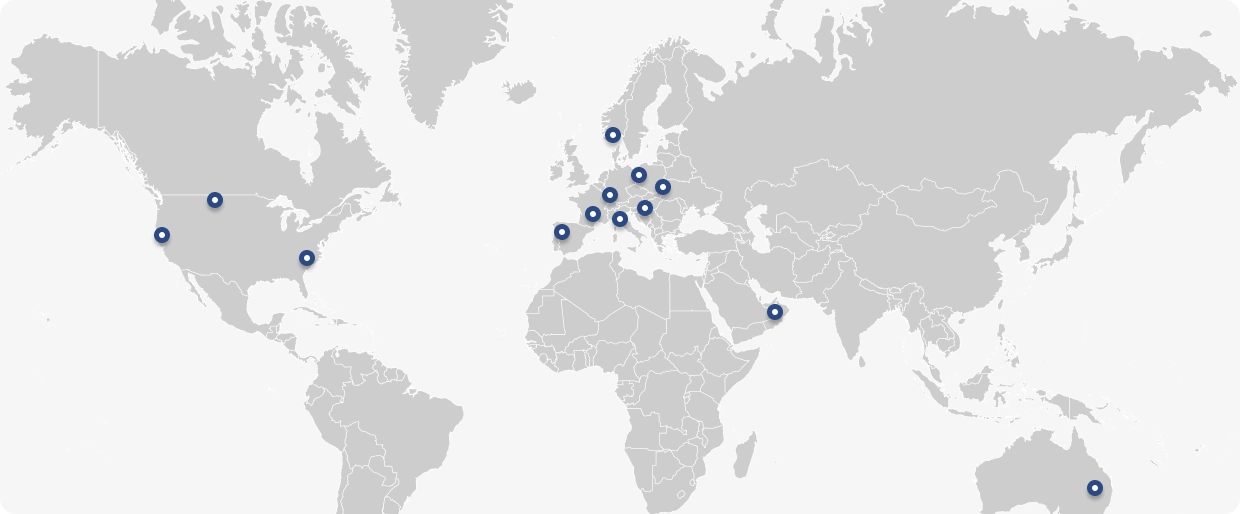
Gonini's international ecommerce fulfilment network spans four regions, all connected to the same inventory system.
Every hub feeds one dashboard, and you work through a single integration and one contact, whichever countries you add. See how a global fulfilment network fits together.
International fulfilment services →Country Focus: Germany, the Netherlands and Poland
The three EU hubs brands ask about most. Stock in any of them stays visible from the same dashboard, so adding a second EU hub later does not split your reporting.
The largest ecommerce market in the EU, which is why so many brands start by looking for a 3PL in Germany. Local stock puts German shoppers and Amazon.de within domestic delivery range. It also brings German rules into play, such as registering your packaging before selling packaged goods to German consumers.
Fulfilment inside Germany →Strong logistics infrastructure and central reach into Germany, France, Belgium and the Nordics.
Fulfilment in the Netherlands →Lower operating costs and strong coverage into Central and Eastern Europe.
Fulfilment in Poland →Beyond Europe: US, Canada and Australia
The same logic applies outside Europe. These international fulfilment solutions turn long-haul parcels into domestic deliveries in each market.
The largest single market in the network, where low-value parcels from abroad now face tighter customs treatment than they used to.
Domestic delivery instead of long cross-border transit from the UK.
Local stock removes the longest shipping leg in the network.
Each of these markets has its own import and sales tax rules, so check them before committing stock.
Using a US fulfilment centre →VAT, IOSS and Compliance When You Hold Stock Abroad
Storing stock in an EU fulfilment centre creates a VAT registration obligation in that country, and this is where many first-time expanders hesitate. It is worth covering plainly rather than glossing over.
Generally triggered the moment stock is physically held in that country.
Allows a single EU VAT return to cover distance sales across multiple member states.
Applies to low-value imports from outside the EU, not to goods already stored inside it.
The physical movement of stock and the customs processes around it.
VAT registration and filing, not the 3PL. Being upfront about that boundary builds more trust than implying it all disappears. Outside the EU, the US, Canada and Australia each apply their own sales tax rules to locally held stock.
Choosing Which Country to Enter First
Which country to enter first comes down to four questions:
That said, the right answer depends on where your own demand sits, so start from your order data. If you are comparing international expansion services, ask each provider to model the decision against your actual orders.
Top online marketplaces in Europe →How Gonini Handles Country Expansion

Moving stock into a new country with Gonini follows a consistent sequence:
Ready to see how a local hub would change your delivery times and costs? Get a quote, and we will walk through the numbers for your target markets.
Get a quote →Questions about fulfilment abroad
What Is Fulfilment in Europe?
Fulfilment in Europe means storing stock inside the EU and shipping to customers from there, rather than shipping cross-border from the UK. It removes per-parcel customs and cuts delivery times to domestic speeds. See scaling fulfilment across borders for how brands grow from there.
What Is the Amazon European Fulfilment Network?
Amazon's EFN lets sellers store stock in one EU country and ship across the network to others, using Amazon's own warehouses. A third-party EU fulfilment provider works similarly but keeps you off Amazon's platform-specific rules. See expanding into Europe as an Amazon seller for how the two compare directly.
Is an Amazon Warehouse the Same as a Fulfilment Centre?
Not quite. An Amazon warehouse only fulfils Amazon orders under Amazon's rules, while an independent fulfilment centre ships orders from any sales channel, including your own website and other marketplaces.
Do I Need to Register for VAT to Hold Stock in the EU?
Generally yes, since holding stock in an EU country typically triggers a local VAT registration requirement. See EU eCommerce legal requirements for what that involves, and speak to an accountant for your specific situation.
Talk to Gonini About Entering a New Market
Weighing up which country to enter first? Get in touch, and we can talk through your order data and what it points to.
