International ecommerce fulfilment means holding stock in warehouses close to the markets you sell into, rather than shipping every order from one country. If you're selling beyond your home market, or about to, and don't want to build warehousing in every new country yourself, this is what international fulfilment services solve.
This page covers how it works, where Gonini's network reaches, and what changes when you stop shipping cross-border.
Cross-border vs local stock ↓Gonini's international network ↓Customs, duties and compliance ↓International fulfilment means storing stock in fulfilment centres in or near the markets you sell to, so orders ship domestically once they reach the customer rather than crossing a border on every single parcel. The alternative, shipping everything from one central warehouse, works fine at low volume and gets more expensive and slower as international orders grow.
Domestic shipping rates instead of cross-border rates with customs handling on every parcel.
Domestic speed, often next-day, instead of days to over a week.
Cleared once at import, so no duties appear at checkout for the buyer.
The practical difference shows up in three places: cost per parcel, delivery speed, and how much customs friction a customer experiences at checkout. International fulfilment solutions solve for all three at once by moving stock physically closer to demand.
The two approaches differ in every dimension that matters to an international buyer:
| Factor | Cross-Border (Single Warehouse) | Local Stock (In-Market) |
|---|---|---|
| Cost per parcel | Higher, includes customs handling | Lower, domestic shipping rates |
| Delivery time | Days to over a week | Domestic speed, often next-day |
| Customs handling | Required on every parcel | Cleared once, at import |
| Returns | Cross-border, slow and costly | Domestic, fast and cheaper |
| Checkout conversion | Duties often appear at checkout | No surprise costs for the buyer |
Neither approach is universally right. Cross-border shipping remains sensible at low order volumes in a given market, where the cost of holding local stock isn't yet justified.
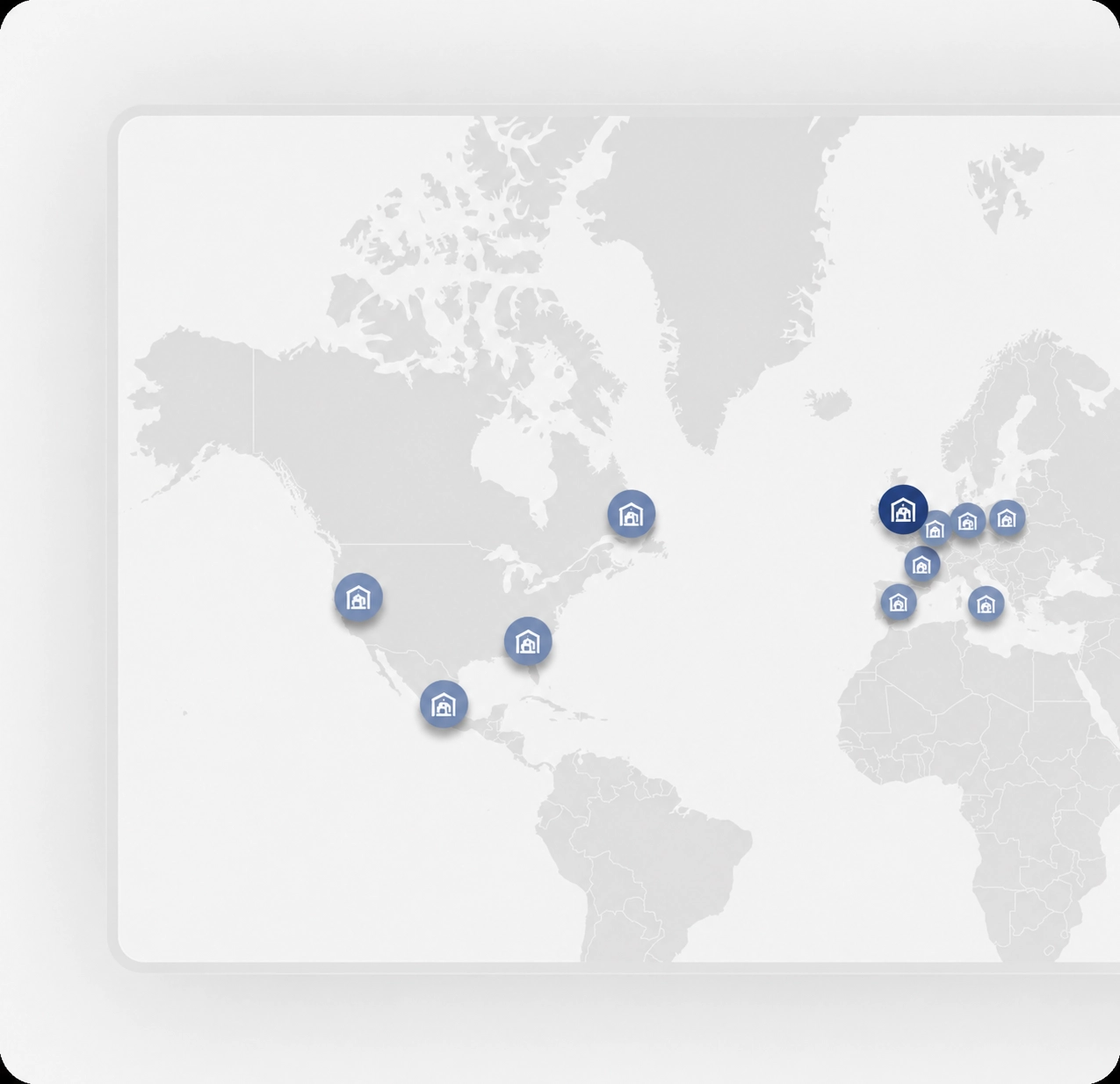
Gonini's international network spans 10 markets across the United Kingdom, the EU (Germany, the Netherlands, France, Spain, Italy and Poland), North America (the US and Canada) and Australia.

For the full detail on Gonini's fulfilment centre network, see Gonini's fulfilment centres.
Holding stock in the EU rather than shipping from the UK removes per-parcel customs duties, cuts delivery times to domestic speeds, and can save UK brands a substantial amount per year in shipping and duty costs alone.
For the full breakdown of EU customs, VAT and choosing a first market, see
European order fulfilment →Once you're already selling in several countries, the challenge shifts from entering a market to operating across all of them at once: distributed stock, inventory visibility, and orders routing to whichever hub can fulfil them fastest.
For how distributed inventory and multi-market operations work, see
Global fulfilment for multi-country sellers →Every international order eventually meets customs, and the shape of the problem is consistent even though the specifics vary by country. The core decisions are:
Getting this wrong is usually what turns a good delivery experience into a bad one, since surprise costs at the door are what actually damage customer trust.
DDP versus DAP shipping →CN22 and CN23 customs declarations →
Ready to see how international fulfilment would work for your markets? Get a quote, and we'll map it against where your customers actually are.
Get a quote →International fulfilment means holding stock in warehouses close to the markets you sell into, so orders ship domestically instead of crossing a border on every parcel. See international logistics for the mechanics behind it.
A fulfilment service stores your stock, receives orders through an integration with your store, and handles picking, packing, shipping and returns on your behalf. Read what 3PL services include for the full picture.
Ecommerce brands selling beyond their home market use fulfilment centres, from a single new country to a full multi-market operation running across several at once.
Pricing is billed per component: storage, pick and pack, shipping and customs handling, and varies by market. See the real cost of ecommerce fulfilment for how the components break down.
Not sure which market to prioritise first? Get in touch, and we can talk through where your international demand is actually coming from.